
By Ethan Lamptey, EAL Spray Finishes, Milton Keynes · Updated
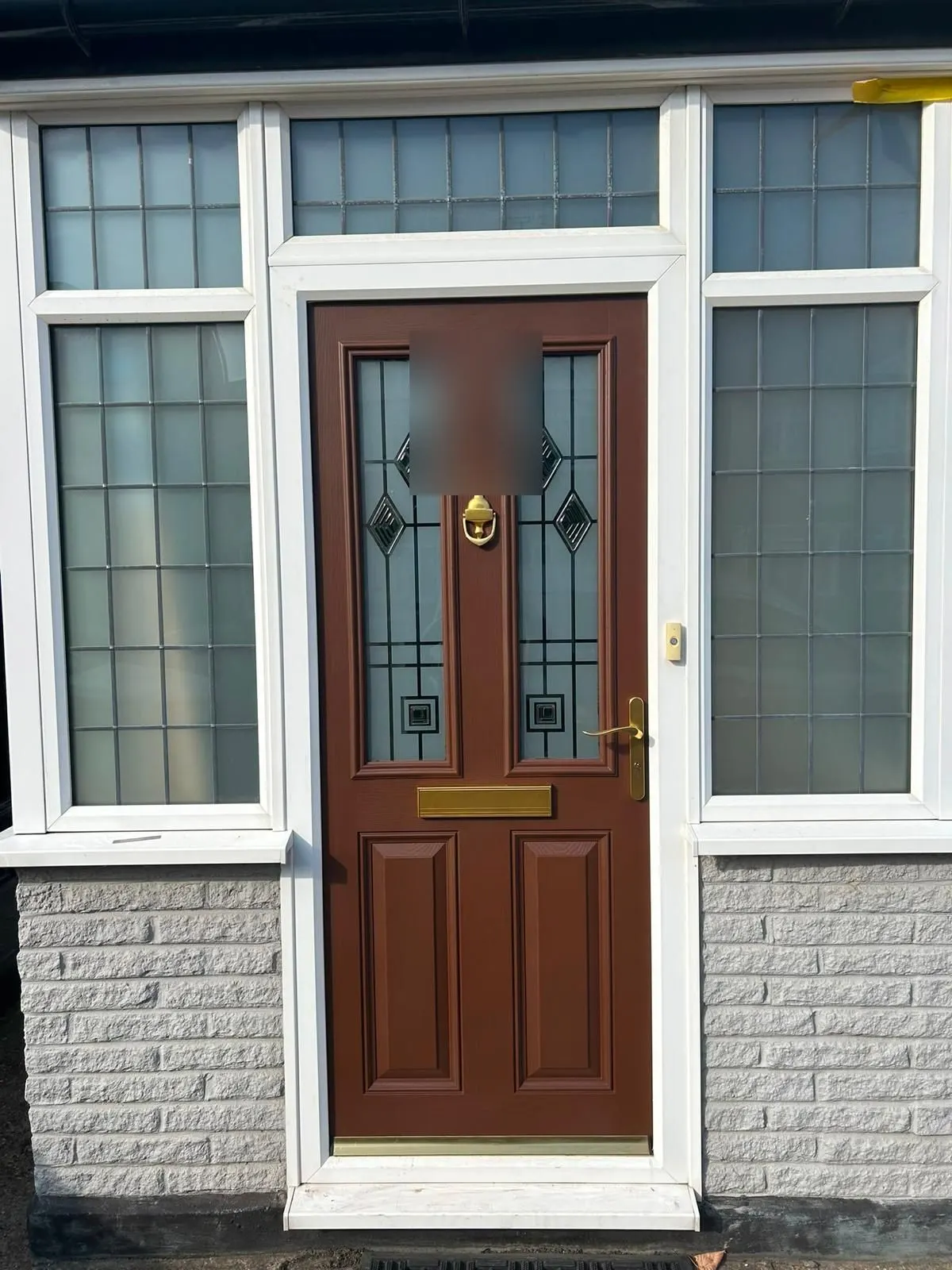
Yes, a composite door can be sprayed a new colour on site. The door's GRP skin is cleaned, keyed and primed, the glass and hardware are masked or removed, and the colour is sprayed in thin coats for a smooth finish. EAL Spray Finishes sprays composite doors from £180, compared with £1,200 to £2,500 for a new composite door. If your door is fairly new, check your installer's warranty before painting it.
How a composite door is sprayed
Most composite doors have a glass-reinforced plastic (GRP) skin over an insulated core, often with a moulded woodgrain texture. That skin takes a sprayed finish well when it's prepared properly:
- Handles, letterbox and knocker are removed or masked.
- The door and frame are cleaned and degreased.
- The surface is keyed so the primer can grip, taking care not to flatten the grain texture.
- Glass, seals and the surrounding brickwork are masked.
- A bonding primer goes on first, then the colour in thin, even coats.
- Everything is de-masked and the hardware refitted.
Because the colour is sprayed rather than brushed, it follows the moulded grain instead of filling it, so the door keeps its texture.
Will spraying affect my door's warranty?
Some composite door manufacturers exclude painting from their warranty. If your door is only a few years old, check the paperwork or ask the installer before you change the colour.
Doors old enough to have faded or to be the wrong colour for a new look are often already out of warranty, but it's always worth checking first.
Painting a composite door yourself
Painting a composite door is a common DIY search, and it can be done with the right primer and exterior paint. The difficulties are the same as with uPVC: a smooth, factory-finished surface that ordinary paint doesn't grip, plus a textured skin that shows brush marks and drips.
| DIY painting | Professional spraying | |
|---|---|---|
| Texture | Brush can fill or streak the grain | Even coat that follows the grain |
| Edges and glazing beads | Easy to get drips and build-up | Masked and sprayed evenly |
| Colour | Limited to tins on the shelf | Any RAL or British Standard colour |
| Cost | Primer, paint and kit | From £180 with EAL |
Spraying vs buying a new composite door
| Option | Typical cost |
|---|---|
| Composite door respray with EAL | From £180 |
| New composite door, supplied and fitted (market) | £1,200–£2,500 |
A new door makes sense if the lock mechanism keeps failing, the door has warped or the core is damaged. If it closes, locks and seals properly and you just want a different colour, spraying gives you the new look for a fraction of the price.
Popular composite door colours
Anthracite grey (RAL 7016) to match grey windows is the most common change. Black, deep green, navy, burgundy and cream are popular for a statement front door. Woodgrain doors are often sprayed a solid colour, and the moulded grain still shows faintly through, which many people like.
Try colours on the colour visualiser, and see a real job in the woodgrain composite door case study.
Looking after a sprayed composite door
A front door gets more handling than any other part of the house, so a little care keeps it looking new:
- Let the finish cure fully before cleaning it. Ethan will tell you on the day when that is.
- Clean with warm water, a little mild washing-up liquid and a soft cloth. Avoid solvents, bleach and abrasive pads.
- Wipe around the handle and letterbox more often, where hand grease builds up.
- Oil the hinges and lock once a year, wiping away any excess.
- Get any chips around the handle or the bottom rail touched in early.
See the aftercare guide for more.
Doing the frame and windows at the same time
The door frame, side panels and nearby windows usually look best sprayed in the same colour. Doing them in one visit shares the set-up cost. Windows start from £50 and uPVC doors from £150. See composite door spraying and the uPVC spraying cost guide.