
By Ethan Lamptey, EAL Spray Finishes, Milton Keynes · Updated
Look after sprayed uPVC by letting the finish cure fully, then cleaning it two or three times a year with warm water, a little mild washing-up liquid and a soft cloth. Avoid solvent cleaners, bleach, cream cleansers, scouring pads, uPVC 'restorer' products and pressure washers held close to the frame. Check once a year for chips around handles and sills and get them touched in early. Ethan will tell you on the day when it's safe to start cleaning.
The first few weeks
A sprayed finish is dry to the touch long before it's fully cured. During curing the coating keeps hardening, so it's more easily marked than it will be later.
- Ethan will tell you on the day when windows and doors can be opened, closed and locked as normal, and when it's safe to clean.
- Avoid sticking tape, stickers or suction hooks to the frames while the finish cures.
- Take care with ladders, bins and bikes near freshly sprayed frames and garage doors.
- Don't refit tight draught excluders or brushes against the new finish until it has hardened.
How to clean sprayed frames
- Rinse loose dirt and dust off with clean water first, so you don't rub grit into the surface.
- Wash with warm water and a few drops of mild washing-up liquid, using a soft cloth or sponge.
- Rinse with clean water.
- Dry with a soft microfibre cloth to avoid water marks.
Two or three times a year is enough for most homes. Frames near a busy road or under trees may need a wash more often.
What to avoid
- Solvent cleaners, white spirit, nail polish remover or thinners.
- Bleach and strong household cleaners.
- Cream cleansers, scouring pads and abrasive sponges.
- uPVC 'restorer' or 'whitener' products, which are made for bare white uPVC, not painted frames.
- Pressure washers held close to the frame or aimed at edges.
- Warm water, mild washing-up liquid and a soft cloth.
Seals, hinges and hardware
The rubber seals and the hardware are masked during spraying, so they keep working as before. To keep everything running smoothly:
- Wipe the seals with a damp cloth when you clean the frames. Don't paint over them.
- Put a drop of light oil on hinges and locking points once a year, wiping away any excess so it doesn't sit on the paint.
- Keep the drainage slots at the bottom of window frames clear so water can escape.
- If a handle or hinge needs replacing later, have it fitted carefully so the screwdriver doesn't scratch the frame.
Garage doors, front doors and busy areas
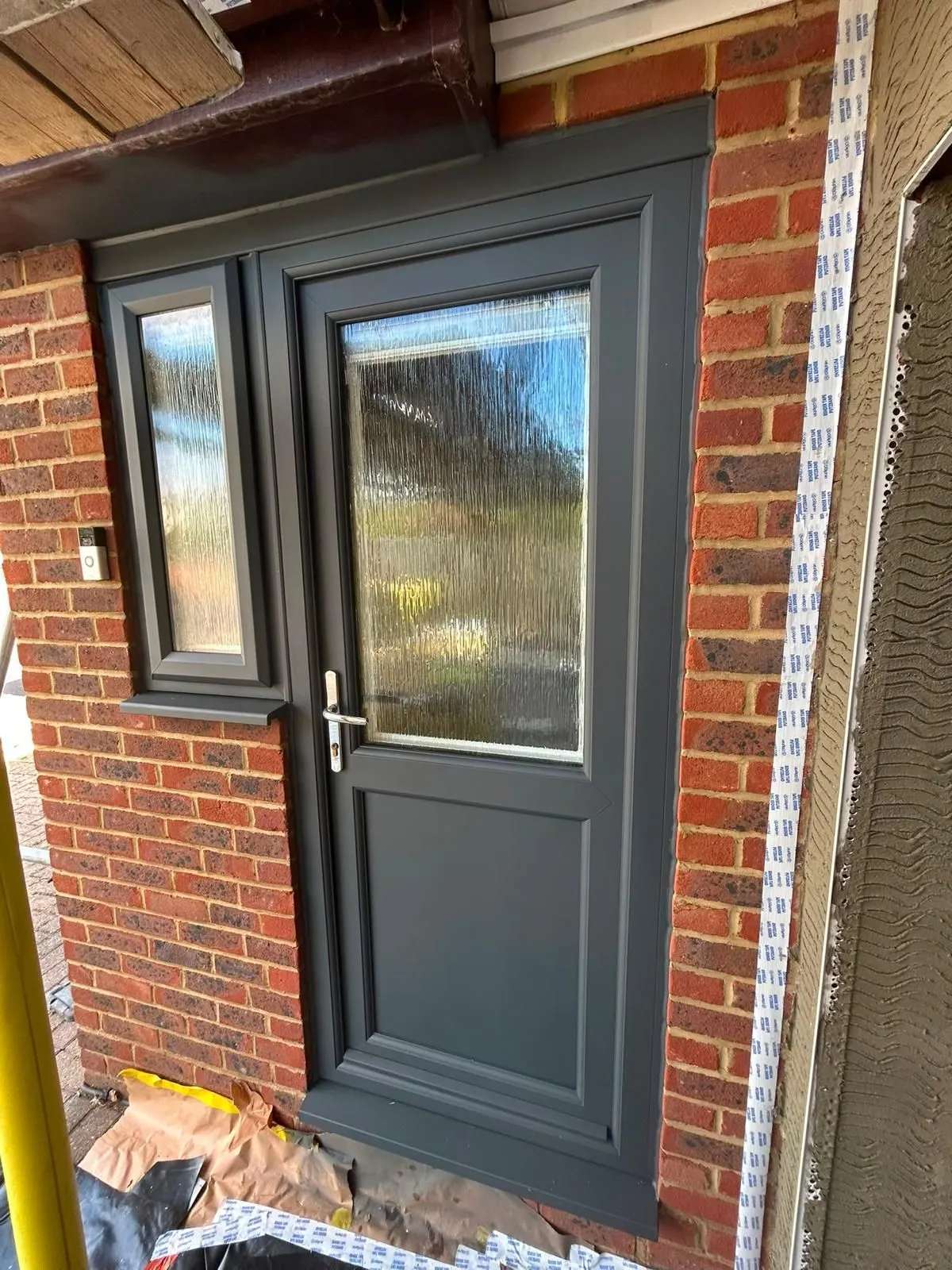
Some sprayed surfaces work harder than others. A front door is opened many times a day, and a garage door is reached for with muddy hands, bumped by bikes and splashed from the drive. A little extra care goes a long way:
- Wipe the area around the handle and letterbox more often than the rest of the door, as hand grease builds up there first.
- Rinse road salt and mud off the bottom of garage doors in winter, then dry them.
- Keep wheelie bins and bikes from leaning on sprayed frames and doors.
- Use a soft brush, not a stiff broom, to clear cobwebs and leaves from frames.
- If a garage door motor or spring is serviced, ask the engineer to take care with the finish.
Doors and garage doors that are looked after like this tend to keep their colour and sheen much longer than ones left to the weather.
A simple yearly check
Once a year, ideally in spring, walk round the house and look at:
- Corners of frames and glazing beads, where any lifting would start.
- Around handles, letterboxes and keyholes, which get the most wear.
- Window sills and the bottom rail of doors, where water sits.
- Garage door bottoms and edges, which get knocked and splashed.
Small chips are easy to touch in if they're caught early. Leaving them lets water creep under the edge. Get in touch if you spot anything.
How long the finish should last
With good preparation and this kind of care, the paint has an expected lifespan of 10 to 15 years when it's maintained correctly. That's an expected life, not a guarantee. Read more in how long sprayed uPVC lasts.
Garage doors take more knocks than windows, and very dark colours in full sun run hotter, so those are the areas to keep an eye on. See garage door spraying and uPVC window spraying.