
By Ethan Lamptey, EAL Spray Finishes, Milton Keynes · Updated
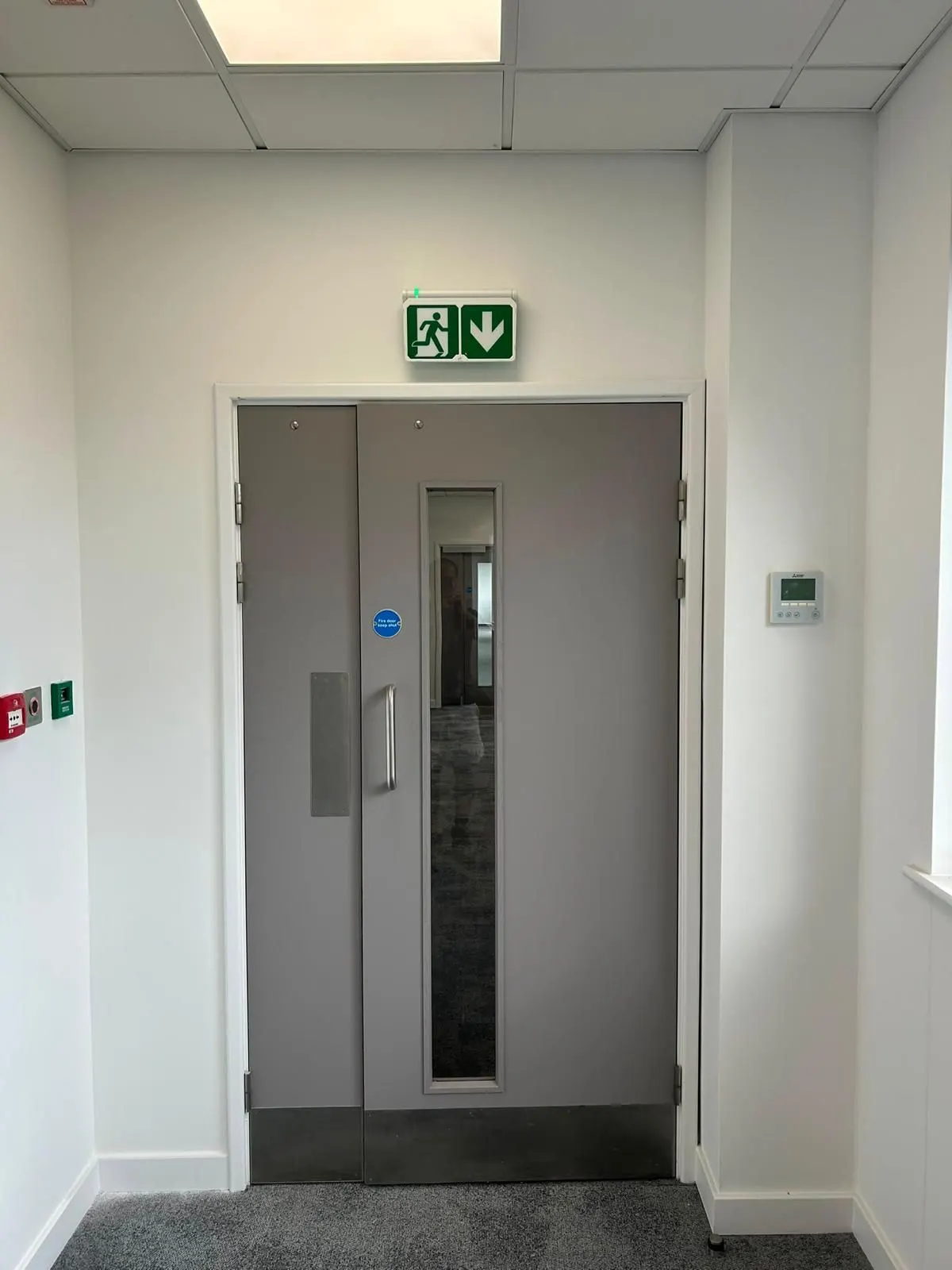
Yes, fire doors can usually be painted or sprayed, as long as it's done within the door manufacturer's guidance: thin coats, and no paint on the intumescent strips, smoke seals, hinges, signage or certification labels. Painting is cosmetic. It doesn't change whether a door is fit for purpose, which is the job of the building's responsible person and fire risk assessment. EAL Spray Finishes sprays fire doors on site from £125 per door. Spraying does not inspect, repair or certify a fire door.
What the rules generally allow
Most fire door manufacturers allow doors to be decorated, because doors in offices, flats and schools need refreshing over their life. The usual conditions are:
- Follow the door manufacturer's or certification scheme's guidance for finishes.
- Apply paint in thin coats so it doesn't build up on edges or affect how the door closes.
- Keep paint off intumescent strips and smoke seals, which must be able to expand and seal in a fire.
- Keep hinges, closers and hardware free of paint so the door still self-closes and latches.
- Never paint over certification labels, plugs or fire door signage.
If you can't find the manufacturer's guidance, ask your fire door supplier or fire risk assessor before work starts.
What must stay clear of paint
- Intumescent strips in the door edge or frame.
- Smoke seals and brush seals.
- Hinges, door closers, latches and hold-open devices.
- Certification labels, plugs and fire door signs.
- Glazing beads and fire-rated glass seals.
- Door leaf faces and frame faces: these are what get sprayed, in thin coats.
The responsible person and the fire risk assessment
In England, the responsible person for a building (often the employer, owner, landlord or managing agent) must make sure fire safety measures, including fire doors, are maintained. That is done through the fire risk assessment and regular checks by a competent person.
Redecorating doesn't replace any of that. If doors have damaged edges, gaps that are too large, missing seals or closers that don't work, those need a qualified fire door inspector or installer to put right. Decorating can follow once the doors are sound.
What EAL's spraying does and doesn't do
What we do: mask strips, seals, hardware and labels; prepare the surfaces; and spray thin, even coats in a contained area set up on site, with floor protection, so the building can stay in use. See commercial fire door spraying and the office fire doors case study.
Why spray rather than brush-paint fire doors
- Thin, even coats are easier to achieve with spraying, which helps avoid build-up on edges.
- A smooth, consistent finish across many doors in a corridor or block.
- Masking strips, seals and labels is part of the job, rather than trying to brush neatly around them.
- Dated veneer or scuffed painted doors can be modernised in a corporate or neutral colour.
Metal doors, louvres and communal areas
Fire doors are rarely the only tired surface in a block of flats or an office. Steel store doors, bin store doors, louvres, plant room doors and communal entrance doors often date from the same time and look just as worn. Doing them together gives the building a consistent look and shares the set-up cost.
- Steel doors and louvres are cleaned, rust is treated and primed, and the colour is sprayed on site.
- Communal entrance doors can be matched to the building's colour scheme or a corporate RAL colour.
- Work can be phased floor by floor or block by block so residents and staff aren't disrupted.
A real example is the communal store doors case study, where dated doors and louvres were sprayed white.
Planning a fire door refresh
- Check the fire risk assessment and any recent fire door inspection, and fix defects first.
- Find the door manufacturer's guidance on finishes if you have it.
- Choose a colour; corporate RAL colours can be matched.
- Send photos of the doors, a door count and the building address for a quote.
- Agree working areas and times so the building can stay in use.
Fire doors start from £125 per door, with better rates across a block or floor. Metal store doors and louvres can be done at the same time: see metal door spraying. Ask for a free quote.